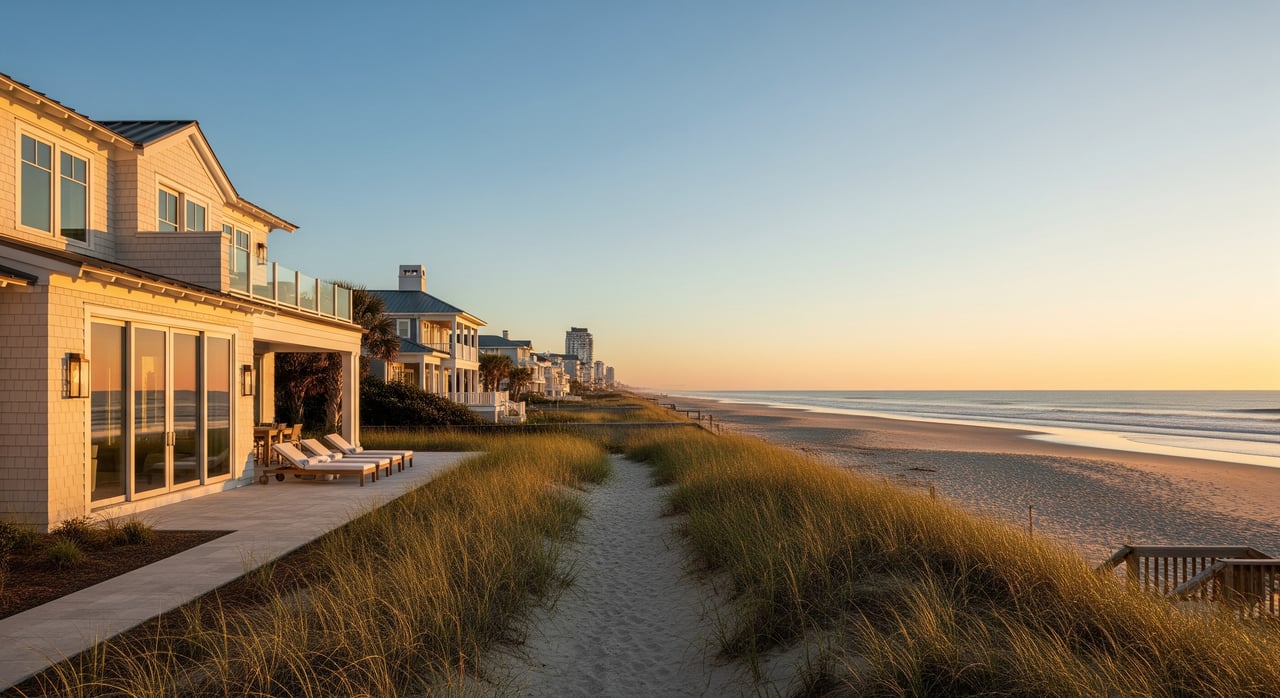
Love the idea of waking to Atlantic sunrises, but not sure if oceanfront or second row is right for you in North Myrtle Beach? You’re not alone. Buyers and sellers often weigh views, access, rental potential and risk before deciding which side of the street wins. In this guide, you’ll get a clear, local comparison that helps you choose with confidence. Let’s dive in.
Oceanfront vs second row: what they mean
Oceanfront means a property sits directly on the beach with unobstructed views and direct access to the sand. Owners typically enjoy private walkovers and immediate proximity to the water.
Second row (also called second tier) refers to the first line of homes or condos just inland from oceanfront, usually one lot or one street back. You may capture partial ocean views from upper levels depending on setback, dune height and sightlines.
View, access and lot conditions
Your view depends on line of sight. Oceanfront delivers wide, uninterrupted vistas, while second row can range from partial to limited views based on building height and neighboring structures. Many second‑row lots sit slightly higher, which can influence flood risk and insurance.
Beach access is simplest from oceanfront, where you may have a private boardwalk. Second row typically uses nearby public access points, which are easy to reach but add a short walk.
Setbacks and buildable footprints can be tighter for oceanfront due to coastal regulations. Second‑row properties often have fewer shoreline restrictions and can offer more flexible parking, landscaping or storage options.
Market tradeoffs to consider
Purchase price and premium
Oceanfront usually commands a premium for direct views, access and scarcity. The exact difference varies by submarket, property type and condition. In fast‑moving cycles, the gap can widen or narrow, so request current, neighborhood‑specific comps before you decide.
Appreciation and resale
Oceanfront remains highly desirable long term, but it can be more cyclical and sensitive to storm headlines and insurance costs. Second row attracts a broader buyer pool at lower entry points, which can support liquidity in cooler markets.
Short‑term rental performance
Oceanfront properties often achieve higher nightly rates and book quickly in peak season. Second row can still perform well, especially upper‑floor condos or homes with partial views and easy beach access. When you compare options, focus on net results, not just headline rates, after you account for fees, cleaning, utilities and insurance.
Operating costs, taxes and fees
Property taxes in Horry County follow assessed value, so the higher the purchase price, the higher your annual tax bill in dollars. Oceanfront HOAs sometimes assess larger reserves for exterior and dune‑related maintenance. Insurance and maintenance are the big variables: oceanfront faces more exposure to salt, wind and wave action, which can shorten replacement cycles for HVAC, windows, roofing and decks.
Flood zones, insurance and risk
How to check flood risk
Start by confirming the property’s FEMA flood zone. Many oceanfront parcels fall in VE or high‑risk AE zones, while second row may be AE or outside the Special Flood Hazard Area. Use the official FEMA Flood Map Service Center to verify the exact zone and request an Elevation Certificate if available.
Insurance basics for coastal buyers
If a home is in a Special Flood Hazard Area, lenders typically require flood insurance. Premiums depend on the flood zone and the structure’s elevation. Learn the fundamentals with the National Flood Insurance Program guidance, and contact local agents for wind and flood quotes on the specific address. The South Carolina Department of Insurance offers consumer resources on coastal coverage and deductibles.
Sea level rise, erosion and renourishment
North Myrtle Beach is part of the Grand Strand, which manages long‑term erosion through periodic renourishment and coastal planning. For big‑picture context, review scenario maps in the NOAA Sea Level Rise Viewer. Ask about recent or planned renourishment projects when you evaluate oceanfront properties and HOAs.
Daily living and lifestyle
Oceanfront living gives you instant beach access, sunrise views and a quiet, private feel with less through‑traffic. You may trade some yard space and take on more vertical living, such as stairs or an elevator.
Second‑row homes often offer easier parking and street access, potential for larger yards and quick proximity to local restaurants and services. You still get the coastal breeze and walkability without being directly on the dune line.
Short‑term rentals and local rules
North Myrtle Beach historically allows short‑term rentals, but rules and procedures can evolve. Owners generally need to comply with local business licensing, occupancy tax collection, noise and parking ordinances, and any HOA or condo restrictions. Verify current requirements with the City of North Myrtle Beach and check county resources via Horry County government. If you are purchasing for income, gather 12 months of verifiable rental history and confirm management costs before you finalize pricing.
Maintenance and durability
Oceanfront properties endure more direct salt spray and wind. Expect faster wear on exterior finishes, more frequent window and deck maintenance, and proactive HVAC and metal hardware care. Second row still faces coastal weathering, though replacement cycles are often longer and total upkeep can be lower over time.
How to choose what is right for you
- If your top priority is the full ocean panorama and direct sand access, oceanfront usually wins. Build your budget with higher insurance and maintenance in mind.
- If you want walkable beach living with a lower entry cost and potentially wider resale pool, second row often offers the best value.
- If you plan to rent, compare net operating income, not just nightly rates. Factor in insurance, HOA reserves, utilities and management.
- If risk is a concern, prioritize elevation, construction quality and verified flood data over assumptions about distance from the beach.
Buyer checklist: verify before you buy
- Confirm flood zone on the FEMA Flood Map Service Center and request an Elevation Certificate.
- Obtain flood and wind insurance quotes for the specific address; consult the South Carolina Department of Insurance for guidance on policies and deductibles.
- Review 12 months of short‑term rental history if applicable and verify with a property manager.
- Confirm local business licensing, occupancy taxes and HOA rental rules with the City of North Myrtle Beach and your HOA.
- Request neighborhood‑specific sales comps for oceanfront and second row in the same submarket and property type.
- Order a coastal‑focused inspection. Ask about foundation or piling condition, corrosion and any storm‑related repairs.
- Check beach access points, dune status and any easements or encroachments through Horry County resources.
- Ask about recent or planned beach renourishment and shoreline management updates.
Seller checklist: prepare for savvy buyers
- Compile clean, verifiable rental figures to support pricing if your property is income‑producing.
- Share the flood zone, any Elevation Certificate and, if allowed, an insurance history summary.
- Provide estimates or receipts for key coastal maintenance items such as roofing, windows, decking and piling inspections.
- Highlight location advantages like views, private walkovers and proximity to access points, while acknowledging higher insurance or maintenance where applicable.
- Position the property with net returns in mind. Buyers will model NOI after insurance, management and HOA reserves.
Work with a trusted local advisor
Choosing between oceanfront and second row is as much about lifestyle as it is about numbers. You deserve advice tailored to your goals, your risk tolerance and the exact micro‑location you are considering. If you want curated comps, rental pro formas and insurance introductions, connect with Angela Bohnaker for concierge guidance, remote showings and a streamlined path to the right coastal home.
FAQs
What is the difference between oceanfront and second row in North Myrtle Beach?
- Oceanfront sits directly on the beach with unobstructed views and direct sand access, while second row is one lot or street back and may offer partial views from upper floors.
How do flood zones affect insurance for oceanfront and second‑row homes?
- Many oceanfront parcels fall in higher‑risk VE or AE zones that can mean higher flood premiums; second row can vary. Verify the exact zone on the FEMA Flood Map Service Center and ask for an Elevation Certificate.
Are short‑term rentals allowed in North Myrtle Beach near the ocean?
- Short‑term rentals are historically permitted, but you must follow local business licensing, tax collection and HOA rules. Confirm current requirements with the City of North Myrtle Beach.
Do oceanfront properties always earn more rental income than second row?
- Oceanfront often commands higher nightly rates, but net results depend on expenses like insurance, HOA reserves and maintenance. Compare modeled NOI for specific addresses before deciding.
What maintenance costs are higher for oceanfront compared to second row?
- Oceanfront homes typically face more frequent window, deck, exterior finish and HVAC replacement due to salt, wind and humidity; second row experiences coastal wear but at a slower pace.